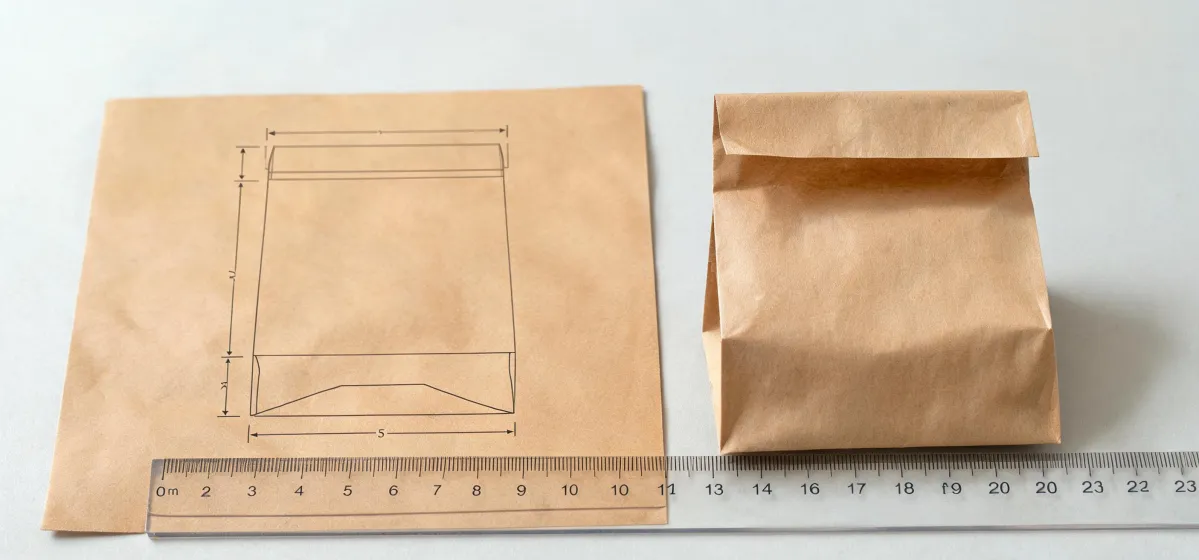
The Call That Started It
In March 2024, I got a call at 6:40 p.m. on a Friday. (Should mention: I was already half out the door.) A coffee roaster we'd worked with twice before needed 4,000 custom-designed kraft paper bags for a product launch — six days out.
For context on my role: I coordinate rush orders at a B2B packaging company. I've handled 200+ of them in eight years, including same-day turnarounds for regional food and beverage clients. Six days for a custom-printed SOS bag isn't the tightest timeline I've ever worked with, but it's close.
Their previous supplier was a trading company that had quoted "7–10 business days" three weeks earlier and then quietly pushed the date when the order was already in production. Normal turnaround for this job — full-color print on sos paper bags at that quantity — is 12–15 business days at most kraft paper bags manufacturers we work with will quote you. Six days is not normal. But depending on the factory's press schedule and paper stock, it isn't impossible.
That's the thing about sos paper bags sourcing on a deadline: the first question isn't price. It's whether any kraft paper bags direct supplier out there has 100gsm kraft stock and open press time in the next 48 hours. Everything else is secondary.
Saturday: Three Factories, One Real Option
By Saturday afternoon, we had three candidates. Two were out immediately. One didn't stock the kraft weight the client needed — they could only do 80gsm, which wasn't going to survive a coffee bag plus a jar inside it. The other could hit the date but couldn't handle the design's coverage.
The third was a factory we'd used on two rush jobs before, based in Guangdong, with a rotary press that could run SOS bags at our required thickness. They took the job Saturday afternoon.
Here's a difference worth knowing if you're sourcing for the first time: the trading company their original supplier used had farmed the job out to another factory — one neither the buyer nor the trading company actually controlled. When that factory slipped, nobody could do anything about it. With a kraft paper bags direct supplier, the people telling you the timeline are the same people running the press. That's worth something when a deadline is real.
I hit "confirm" on the purchase order Saturday at 4:15 p.m. and immediately second-guessed it. What if the factory's weekend skeleton crew couldn't get the plates done until Monday? What if the kraft stock they claimed was actually allocated to a Halloween order? The next 48 hours were going to be stressful no matter what I did.
The Problem Nobody Saw Coming
The client's artwork was a full-bleed near-black with a gold logo. On uncoated kraft. That should have been my first red flag, and honestly, it was — I just didn't push hard enough on it.
Sunday morning, the factory's print foreman sent a video from his phone. He stood at the rotary press with a proof sheet of similar coverage on the same stock, and he folded it along the gusset line. The fold cracked. Dark ink flaked off along a 4-inch section rough enough to see from a meter away.
This is a real thing with SOS bags that doesn't come up in local print shops — the bag is a folded sheet by construction. The gusset, the pinch bottom, the mouth opening: those are all stress lines. Heavy ink coverage on uncoated kraft doesn't flex well along those lines. On 100gsm kraft, the cracking shows up within dozens of handlings. On a coffee bag that a customer picks up, folds, and tosses in a bag fifty times before the display ends, that means a black bag with white stress fractures within a week of the launch.
Five years ago, catching this before production was a matter of shipping a physical proof and waiting 3–4 days for it to arrive. We didn't have that kind of time. What the factory could do — and what's genuinely changed about this industry in the last few years — is send a video walkthrough of the press running a similar job, plus a photo of the fold test, within about 90 minutes of the question being raised. We made a call from a photo and a 20-second clip, and despite the obvious risk, I approved a rework.
The Rework, and the Fix
Two options, essentially. One: reduce the ink coverage — swap the full-bleed black for a lighter tint block that would flex with the fold. Two: shift the design so the heaviest coverage avoided the gusset lines entirely. The client's marketing lead approved both in about 40 minutes of back-and-forth (should mention: she called the lighter tint "actually more on-brand," which I've heard from about half the clients who go through this).
We also asked the factory to overnight a physical sample of the new proof — not because we doubted the video, but because the client's director wanted to hold it. Given the SOS fold problem, that was reasonable. It arrived Tuesday.
Presses rolled Wednesday morning. The run finished Thursday night. Bags were at the client's warehouse Friday afternoon — day five of the six-day window.
Total extra cost: roughly $400 in reprinting one plate and the overnight sample. The client's alternative was pursuing the original supplier's liability, which is a process that usually takes longer than the launch event itself.
What I'd Take Away From This
The version of this story I'd tell someone sourcing kraft bags for the first time is shorter: the timeline almost killed us, but the ink coverage was the actual problem, and it was catchable three days before print started because the factory could show us instead of tell us.
I can only speak to our situation — a B2B packaging coordination role with clients who routinely accept design adjustments under pressure. If you're sourcing for a brand with a rigid brand book and no flexibility on print coverage, the calculus is different: you'll want the design reviewed against the bag construction before you commit to a rush timeline, not during one. This worked for us, but our situation was unusual in that the client was willing to make a last-minute design call. Your mileage may vary.
What's changed in this industry since 2020 is that a mid-size buyer can now get real-time visibility into a factory floor — video proofs, fold tests, press walkthroughs — from seven time zones away, usually the same day. What hasn't changed is that SOS paper bags are folded objects. They crack if you push ink coverage across stress lines, no matter how fast the turnaround is or how good the factory's reputation. The fundamentals don't move. Only the speed at which you can catch your own mistake does.
For anyone running their own SOS sourcing process: I'd push the factory to send a fold test with your actual coverage before they print. Not the digital proof. A fold test on the actual stock. It'll cost you a day and it might save you the design.